
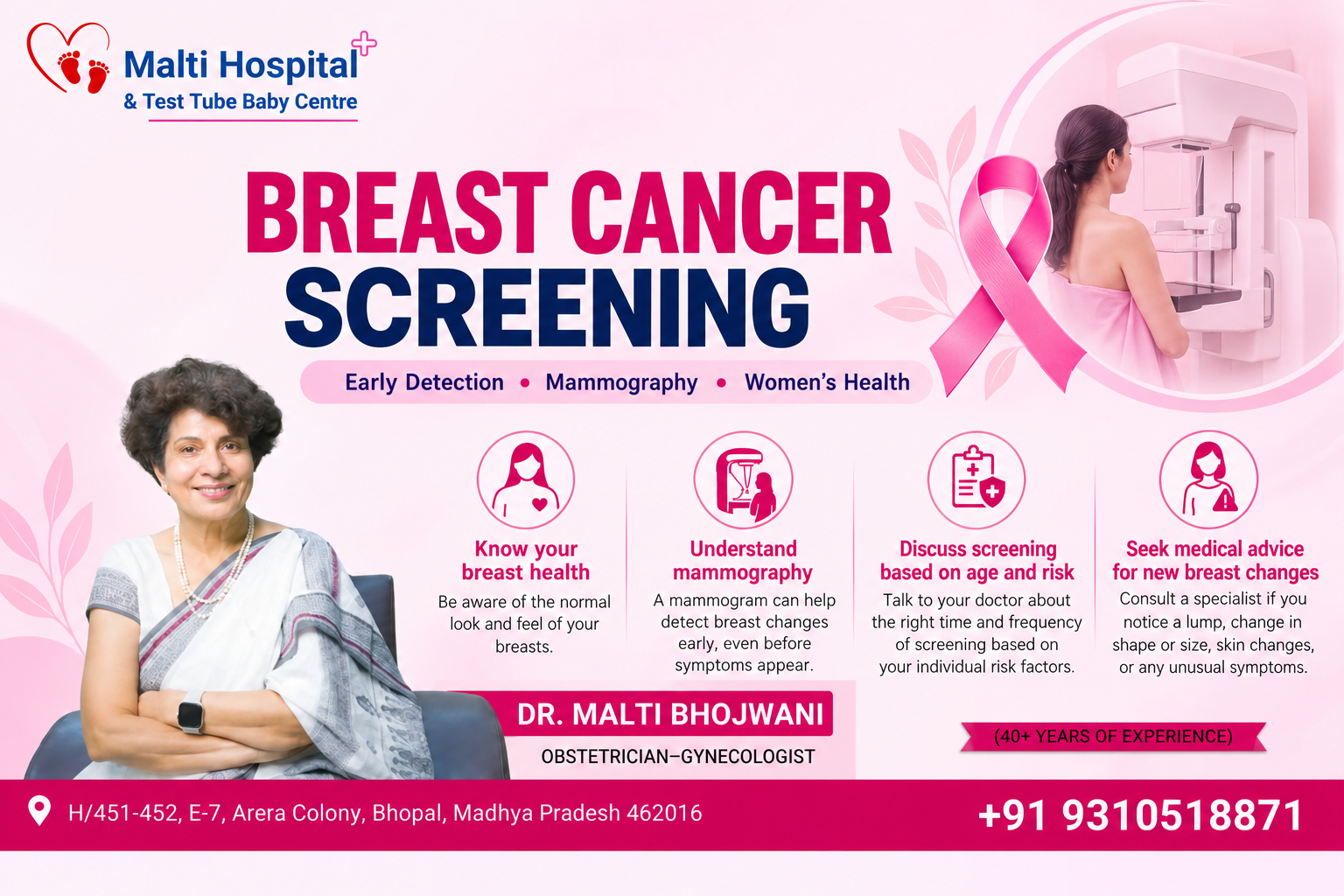





Breast cancer is one of the most common cancers affecting women. Early identification of breast abnormalities can help doctors investigate suspicious changes and determine whether further testing or treatment is required. Regular screening, awareness of breast changes and timely medical evaluation are important parts of breast health.
Women searching for Breast Cancer Treatment in Bhopal should understand that screening and treatment serve different purposes. Screening aims to identify possible signs of cancer before symptoms develop, while treatment begins after a diagnosis and depends on the cancer type, stage and individual health factors. Appropriate screening can help identify abnormalities that require further assessment, but it cannot guarantee that cancer will always be detected.
At Malti Hospital & Test Tube Baby Centre, Bhopal, women’s healthcare is an important part of the hospital’s history. Established in 1986, the hospital has focused on maternity, gynaecology and fertility care. Dr. Malti Bhojwani, an experienced obstetrician and gynaecologist, has more than 40 years of experience in women’s health, maternity care and fertility treatment.
Understanding when screening may be appropriate, which tests are available and when to seek medical attention can help women make informed decisions about their health.
What Is Breast Cancer Screening?
Breast cancer screening involves examining the breasts for possible signs of cancer before symptoms become apparent. The purpose is to identify suspicious changes that may need additional investigation. Screening is different from a diagnostic examination. A screening test is generally performed in someone without breast symptoms, whereas diagnostic testing is used when a lump, nipple discharge, skin change or another concern has already developed.
Women researching Breast Cancer Early Detection in Bhopal should understand that screening recommendations depend on age, personal medical history, family history and other risk factors. Screening may involve mammography, while ultrasound or MRI may be recommended in selected situations. A doctor can help determine which approach is appropriate.
Women seeking Breast Cancer Screening in Arera Colony may want to understand the available tests, the recommended screening schedule and the next steps if an abnormality is found. Similarly, those researching Breast Cancer Screening in E-7 Bhopal should distinguish between routine screening and investigations required for an existing breast problem. For women looking for Breast Cancer Screening Near Shahpura Bhopal, the priority should be access to appropriate assessment, reliable diagnostic services and follow-up when a test result requires further investigation.
Why Is Early Detection Important?
Breast cancer may develop without obvious symptoms during its early stages. Some abnormalities can be detected through screening before a lump becomes noticeable. Early detection can provide an opportunity for timely diagnostic assessment and appropriate treatment planning. However, the effectiveness of screening depends on several factors, including the type of test, the person’s risk profile and whether recommended follow-up is completed.
The goal of Breast Cancer Treatment in Bhopal is to provide care based on an accurate diagnosis. Screening supports this process by identifying abnormalities that may require further evaluation. Early detection does not mean every abnormal finding is cancer. Benign cysts, fibroadenomas and other non-cancerous conditions can also produce breast lumps or imaging abnormalities.
Women seeking Breast Cancer Screening Specialist in Bhopal services should discuss their symptoms, medical history and screening needs with an appropriate healthcare professional. A screening result should always be interpreted in context. If an abnormality is identified, the next step may involve diagnostic imaging, clinical assessment or a biopsy, depending on the findings.
Who Should Consider Breast Cancer Screening?
The appropriate screening schedule varies according to individual risk and the recommendations followed by the treating clinician.
For women at average risk, several established international guidelines recommend starting regular mammography at around age 40. For example, the US Preventive Services Task Force recommends mammography every two years for women aged 40–74. Recommendations may differ by country, organisation and individual circumstances, so women should discuss their screening plan with their doctor.
Women with a strong family history of breast or ovarian cancer, a known inherited cancer-related gene variant or a previous history of certain breast abnormalities may need an earlier or more intensive screening plan.

Factors that may influence screening recommendations
- Age
- Family history of breast cancer
- Personal history of breast disease
- Previous breast biopsy results
- Known inherited genetic risk
- Previous radiation exposure to the chest
- Breast density and other clinical considerations
Women looking for Breast Cancer Screening in Arera Colony should consider their individual risk rather than relying on age alone.
For those researching Breast Cancer Screening in E-7 Bhopal, a discussion with a healthcare professional can help clarify whether routine mammography or a different assessment is appropriate.
Women considering Breast Cancer Screening Near Shahpura Bhopal should also seek advice if they have a new breast lump, nipple changes or other symptoms, because these require diagnostic evaluation rather than routine screening alone.
What Is Mammography?
Mammography is an imaging test that uses low-dose X-rays to examine breast tissue. It can identify certain abnormalities, including small masses and areas of calcification that may not be felt during a physical examination. A mammogram does not confirm cancer by itself. If the images show a suspicious finding, additional imaging or a biopsy may be recommended.
What happens during a mammogram?
During the procedure:
- The patient is positioned beside the mammography machine.
- The breast is placed on an imaging platform.
- The breast is briefly compressed to obtain clear images.
- Images are taken from the required angles.
- A radiologist interprets the images and prepares a report.
Breast compression can cause temporary discomfort, but the procedure is usually brief.
Mammography Screening in Bhopal may be considered for women who meet the relevant screening criteria. The frequency of testing should be based on clinical guidance and individual risk.
Women searching for Best Breast Cancer Screening Hospital in Bhopal should check whether the facility provides mammography directly or coordinates referrals to an appropriate imaging centre.
Those exploring Breast Cancer Screening Specialist in Bhopal services should ask how abnormal mammography findings are evaluated and what follow-up arrangements are available.
Mammography, Ultrasound and MRI: Understanding the Differences
Different breast imaging tests serve different purposes. The most suitable test depends on the patient’s symptoms, age, breast characteristics and risk factors.
Mammography
Mammography is widely used for routine breast cancer screening. It can identify abnormalities that may not be detectable by touch.
Breast Ultrasound
Ultrasound uses sound waves to produce images of breast tissue. It may be used to investigate a lump or help distinguish a fluid-filled cyst from a solid mass. Ultrasound is not a universal replacement for screening mammography. The appropriate use of ultrasound depends on the clinical situation.
Breast MRI
Magnetic resonance imaging uses a magnetic field and radio waves to produce detailed images. It may be recommended for selected women at increased risk or for particular diagnostic questions. MRI is not routinely required for every woman undergoing screening. Women interested in Breast Cancer Early Detection in Bhopal should understand that more testing is not automatically better. A healthcare professional can explain which examination is likely to provide useful information in a particular situation.
For women considering Mammography Screening in Bhopal, the decision should account for age, personal risk and the potential benefits and limitations of screening.
Breast Cancer Symptoms That Should Not Be Ignored
Screening is important, but women should also recognise changes that may require medical evaluation between routine screening appointments.
Possible warning signs include:
- A new lump in the breast or underarm
- A change in breast size or shape
- New nipple inversion
- Bloody or otherwise unexplained nipple discharge
- Skin dimpling or puckering
- Persistent redness or thickening of breast skin
- A persistent area of breast swelling
- A change in the appearance of the nipple or surrounding skin
These symptoms do not always indicate cancer. Hormonal changes, infections, cysts and other benign conditions can cause similar problems. However, a new or persistent change should not be ignored simply because a previous screening test was normal.
Women looking for Breast Cancer Screening Specialist in Bhopal services should seek diagnostic assessment if they notice a concerning breast change. For those researching Breast Cancer Checkup in Bhopal, it is important to remember that a clinical examination and diagnostic imaging may be necessary when symptoms are present.
What Happens If a Screening Test Is Abnormal?
An abnormal screening result does not automatically mean that a person has breast cancer. It means that further evaluation may be required to understand the finding.
The next steps may include:
1. Diagnostic Mammography
Additional mammographic images may be taken to examine a particular area more closely.
2. Ultrasound
Ultrasound may help characterise a mass or other abnormality.
3. MRI
MRI may be appropriate in selected cases when additional information is needed.
4. Breast Biopsy
If imaging or clinical findings remain suspicious, a biopsy may be recommended. During a biopsy, a small sample of tissue is collected for laboratory examination. A biopsy is often necessary to determine whether an abnormality is cancerous. For women researching Breast Cancer Treatment in Bhopal, receiving a confirmed diagnosis is an essential step before treatment decisions are made. Patients should keep copies of their imaging reports, previous mammograms and biopsy results. Comparing current images with earlier studies can sometimes help doctors understand whether a finding is new or has changed over time.
Understanding Breast Cancer Risk Factors
Breast cancer develops through a combination of biological, genetic and environmental factors. Some risk factors cannot be changed, while others may be influenced by lifestyle choices.
Factors that cannot be changed
- Increasing age
- Certain inherited genetic variants
- A strong family history of breast cancer
- Personal history of breast cancer
- Certain previous breast biopsy findings
- Early menstruation or later menopause
Factors that may influence risk
- Alcohol consumption
- Physical inactivity
- Some patterns of hormone exposure
- Excess body weight after menopause
Having one or more risk factors does not mean that a person will necessarily develop breast cancer. Likewise, people without known risk factors can still develop the disease. Women looking for Breast Cancer Screening in Arera Colony should discuss any relevant family history with their healthcare professional. Those considering Breast Cancer Screening in E-7 Bhopal may benefit from sharing details of previous breast conditions, biopsies or genetic testing during their appointment. A risk assessment can help determine whether routine screening is sufficient or whether a different plan may be appropriate.

How Can Women Support Their Breast Health?
There is no single measure that can prevent every case of breast cancer. However, certain habits can support overall health and may help reduce some risk factors.
Maintain a healthy lifestyle
Regular physical activity and a balanced diet support general health. Maintaining a healthy weight, particularly after menopause, may also help reduce certain health risks.
Avoid tobacco and limit alcohol
Avoiding tobacco is important for overall health. Limiting or avoiding alcohol may also reduce exposure to a recognised breast cancer risk factor.
Understand personal and family history
Women should tell their healthcare professional about close relatives who have had breast or ovarian cancer, especially when diagnoses occurred at younger ages.
Be familiar with normal breast appearance
Knowing what is usual for one’s breasts can make it easier to recognise a new change. Breast awareness does not replace recommended screening or clinical assessment. For women seeking Breast Cancer Early Detection in Bhopal, combining appropriate screening with prompt assessment of symptoms is more useful than relying on any single preventive measure.
Breast Health and Women’s Healthcare at Malti Hospital
Malti Hospital & Test Tube Baby Centre has served patients in Bhopal since 1986. Its history is rooted in maternity, gynaecology and fertility care, with a focus on women’s health at different stages of life. The hospital’s work includes obstetric and gynaecological care and fertility services. Women discussing broader health concerns may also need guidance on which specialist or diagnostic service is appropriate for their particular condition.
Dr. Malti Bhojwani is an experienced obstetrician and gynaecologist with more than four decades of experience. She worked as an Assistant Professor at Jaipur Medical College for seven years and later gained international experience as a specialist at Riyadh Central Hospital in Saudi Arabia. Her clinical background includes women’s health, maternity care and fertility treatment.
Women looking for Best Breast Cancer Screening Hospital in Bhopal should confirm whether the facility provides mammography and related breast diagnostic services on-site or through referral. The hospital information supplied for this article describes its women’s healthcare background but does not establish that mammography is available directly at the facility. Patients seeking Breast Cancer Screening Specialist in Bhopal services should choose an appropriate clinician and diagnostic pathway according to their symptoms and risk profile.
Breast Cancer Screening in Shahpura, Trilanga and Arera Colony
Access to screening and follow-up can influence whether women complete recommended breast health assessments. Locality-based searches may help patients identify nearby healthcare options, but the availability of appropriate diagnostic services should always be confirmed. Women researching Breast Cancer Screening Near Shahpura Bhopal should ask whether mammography is available and how additional investigations are arranged if an abnormality is detected.
Those searching for Breast Cancer Screening in Arera Colony may wish to compare access to imaging, specialist interpretation and follow-up care. For residents seeking Breast Cancer Screening in E-7 Bhopal, it is useful to confirm whether an appointment is intended for routine screening or diagnostic assessment of an existing symptom.
Women considering Mammography Screening in Bhopal should also ask how they will receive their results and whom they should contact if further testing is recommended. The most suitable healthcare pathway is one that provides the necessary test, accurate interpretation and appropriate follow-up—not simply the nearest appointment.
What Is the Difference Between Screening and a Breast Checkup?
The terms screening and checkup are sometimes used interchangeably, but they do not always mean the same thing. Screening generally refers to testing people who do not have symptoms, with the aim of detecting possible disease early. A breast checkup may include a discussion of risk factors, a clinical examination and further diagnostic tests when needed. A person with a new lump should not wait for a routine screening appointment. The concern should be evaluated through an appropriate diagnostic pathway. Women searching for Breast Cancer Checkup in Bhopal should explain whether they have symptoms, a family history of cancer or a previous abnormal report. For women seeking Breast Cancer Early Detection in Bhopal, a clinician can help determine whether screening, diagnostic imaging or another form of evaluation is appropriate.
Frequently Asked Questions About Breast Cancer Screening
1. Can breast cancer develop without a noticeable lump?
Yes. Some breast cancers do not produce a palpable lump, especially in their early stages. Mammography may identify certain abnormalities before they can be felt.
2. Does an abnormal mammogram mean cancer?
No. Many abnormal screening results are caused by non-cancerous changes. Additional imaging or a biopsy may be required to establish the diagnosis.
3. Is mammography suitable for every age group?
The benefits and appropriate frequency of mammography vary by age and risk. Women should discuss their individual circumstances with a healthcare professional.
4. Should I wait for my next screening if I find a breast lump?
No. A new lump should be assessed promptly, even if the last mammogram was normal. Diagnostic evaluation is different from routine screening.
5. Does breast ultrasound replace mammography?
Not in every situation. Ultrasound is useful for selected diagnostic questions, but it is not a universal replacement for screening mammography.
6. What should I bring to a breast screening appointment?
Bring previous mammography or ultrasound reports, relevant medical records and information about family history. Tell the clinician about any symptoms or previous breast procedures.
7. Can younger women develop breast cancer?
Yes. Although risk generally increases with age, breast cancer can occur in younger women. A suspicious symptom or significant family history warrants appropriate assessment regardless of age.
8. What happens if a biopsy confirms breast cancer?
The treating team may recommend additional tests to determine the cancer type and stage. Treatment may involve surgery, radiation therapy, hormone therapy, chemotherapy, targeted therapy or a combination, depending on the diagnosis.
9. How often should mammography be repeated?
The recommended interval depends on age, risk factors and the guidelines used by the treating clinician. Women should follow an individual screening plan rather than assuming that everyone needs testing at the same interval.
10. Is a clinical breast examination enough to rule out cancer?
No. A clinical examination can identify concerning changes, but it cannot rule out every breast cancer. Imaging and, when necessary, biopsy may be required.
Conclusion – Breast Cancer Treatment in Bhopal
Breast cancer screening is an important part of women’s healthcare because it can identify abnormalities that require further investigation before symptoms become apparent. Mammography is a commonly used screening method, while ultrasound, MRI and biopsy may be needed in selected situations. Women searching for Breast Cancer Treatment in Bhopal should understand the importance of distinguishing early screening from the diagnosis and treatment of confirmed cancer. Screening recommendations should reflect age, personal and family history, and individual clinical circumstances.
Malti Hospital & Test Tube Baby Centre has a longstanding focus on women’s healthcare, maternity and fertility services. Dr. Malti Bhojwani brings extensive experience in obstetrics and gynaecology. Women considering breast screening should confirm the availability of appropriate imaging services and seek the relevant specialist assessment. Whether searching for Breast Cancer Screening in Arera Colony, Breast Cancer Screening in E-7 Bhopal, or Breast Cancer Screening Near Shahpura Bhopal, the essential priorities are appropriate testing, accurate interpretation and timely follow-up. Breast awareness, suitable screening and prompt assessment of persistent changes can help women make informed decisions about their health.
