Many women today choose to plan pregnancy after the age of 35. Some focus on their career. Some wait until they feel emotionally or financially ready. Others may try to conceive after many years of marriage or after fertility treatment. There is nothing wrong with becoming a mother later in life. But pregnancy after 35 needs extra care. For women looking for High-Risk Pregnancy care in Bhopal, early guidance can make a big difference.
Doctors often call this an “advanced maternal age pregnancy.” It does not mean something bad will definitely happen. It simply means the body may need closer monitoring. The chances of certain complications become slightly higher. With the right support and timely check-ups, most women still have a healthy pregnancy and a healthy baby.
At Malti Hospital & Test Tube Baby Centre in Bhopal, Dr. Malti Bhojwani has helped thousands of women through safe pregnancies over the last 40+ years. She believes that information is the first step toward confidence. A woman should know what signs to watch, when to seek help, and how to protect herself and her baby.
Why Pregnancy After 35 Is Called High-Risk
Pregnancy after 35 does not automatically become dangerous. However, the body changes with age. Egg quality slowly reduces. Hormones change. Some women may already have conditions like thyroid problems, diabetes, high blood pressure, or obesity.
Because of these changes, doctors recommend extra monitoring. This is why many women visit a trusted high risk pregnancy doctor in Bhopal from the beginning of pregnancy.
Research shows:
- Women above 35 may have nearly 20–30% higher risk of pregnancy complications than women in their twenties.
- The chance of high blood pressure during pregnancy increases after age 35.
- The risk of gestational diabetes may become almost twice as high.
- Women above 35 are more likely to need a C-section delivery.
Lekin iska matlab yeh nahi hai ki pregnancy impossible ya unsafe hai. Sahi doctor aur regular care se pregnancy bilkul healthy ho sakti hai.
How Age Affects Fertility and Pregnancy Health
Age affects both fertility and pregnancy health. As women grow older, egg quality slowly drops. At the same time, the body may not respond to pregnancy in the same way as before.
Doctors have seen that fertility starts reducing after 30. After 35, this drop becomes faster. As a result, getting pregnant may take more time. In addition, the risk of miscarriage and pregnancy complications may rise.
Studies suggest:
- Women under 30 may have around 20% to 25% chance of natural conception each month
- After 35, that chance may reduce to 10% to 15%
- After 40, the chance may drop even more
Because of this, women above 35 should stay in touch with an experienced high risk pregnancy doctor in Bhopal from the beginning.
Common Complications of High-Risk Pregnancy After 35
Pregnancy after 35 can be safe. However, some problems are more common in this age group. That is why doctors advise extra care.
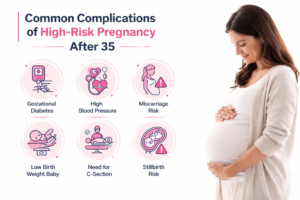
Common risks include:
- High blood pressure
- Preeclampsia
- Gestational diabetes
- Miscarriage
- Premature delivery
- Low birth weight
- Placenta problems
- Chromosomal issues in the baby
- Higher chance of C-section
Therefore, early checkups and timely treatment matter a lot.
Risk of High Blood Pressure and Preeclampsia During Pregnancy
High blood pressure is one of the most common pregnancy problems after 35. It can affect both the mother and the baby. If doctors do not control it on time, it may lead to preeclampsia.
Preeclampsia is a serious condition. It can affect the kidneys, liver, brain, and blood flow to the baby. In severe cases, it may become dangerous.
Doctors have observed that women above 35 may have almost 2 times higher risk of pregnancy-related high blood pressure than younger women.
Warning signs include:
- Severe headache
- Swelling in face or hands
- Blurred vision
- Upper stomach pain
- Sudden weight gain
If these signs appear, do not wait. Instead, contact a high risk pregnancy doctor in Bhopal right away. Quick care can prevent major problems.
Gestational Diabetes in Women Above 35
Gestational diabetes means high sugar levels during pregnancy. This problem is more common in women above 35. In fact, around 10% to 15% of women in this age group may develop it.
This problem can make the baby grow too large. As a result, delivery may become difficult. In some cases, the baby may also have low sugar after birth.
Gestational diabetes may lead to:
- Big baby size
- Early delivery
- Higher chance of C-section
- Breathing problems in the newborn
- Low sugar in the baby after birth
However, this problem can often be controlled. Doctors usually suggest a healthy diet, light exercise, sugar monitoring, and medicine if needed. Therefore, proper High-Risk Pregnancy care in Bhopal can help many women complete pregnancy safely.
Higher Risk of Miscarriage and Pregnancy Loss
The risk of miscarriage also rises with age. This happens mainly because egg quality changes over time. In addition, hormonal issues and health problems can also increase the risk.
Doctors have seen these general trends:
- Under age 30: around 10% miscarriage risk
- Above 35: around 20% risk
- Above 40: around 35% to 40% risk
Although these numbers can feel scary, early medical care helps a lot. Regular scans, blood tests, and close follow-up can support a safer pregnancy journey.
Therefore, women should not ignore early symptoms like spotting, pain, or weakness. A skilled obstetrician gynecologist in Bhopal can guide the next step in time.
Risk of Premature Delivery and Low Birth Weight
Premature delivery means the baby is born before 37 weeks. This risk can increase in women above 35, especially when blood pressure, diabetes, or placenta problems are present.
Doctors have found that pregnancy after 35 may carry around 25% to 30% higher chance of preterm birth compared with younger pregnancies.
Premature babies may face:
- Low birth weight
- Weak immunity
- Breathing trouble
- Feeding difficulty
- Slow growth
Low birth weight usually means the baby weighs less than 2.5 kg at birth. Because of this, doctors monitor baby growth very carefully in high-risk pregnancy cases.
Increased Chances of Chromosomal Problems in the Baby
Age can also affect the baby’s chromosomes. One of the best-known examples is Down syndrome. The risk does not mean the baby will definitely have a problem. Still, the chance becomes higher with age.
Doctors often explain the risk like this:
- At age 25: around 1 in 1,250
- At age 35: around 1 in 350
- At age 40: around 1 in 100
Because of this, extra tests may be advised. These tests help doctors check the baby’s development more closely.
Common tests include:
- NT scan
- Double marker test
- NIPT
- Anomaly scan
Therefore, women above 35 should never skip these important screenings.
How Previous Health Conditions Can Affect Pregnancy
Past health problems can make pregnancy more difficult. For example, thyroid disease, diabetes, obesity, anemia, PCOS, or high blood pressure may increase the risk of complications.
These conditions may lead to:
- Slow baby growth
- Miscarriage
- Premature labor
- Higher chance of surgery
- Extra stress on the mother’s body
If a woman already has one of these health issues, she should meet a high risk pregnancy doctor in Bhopal before or early in pregnancy. That way, doctors can plan better care from the start.
Importance of Regular Prenatal Checkups After Age 35
Regular prenatal visits are one of the best ways to protect both mother and baby. These checkups help doctors find small problems before they become serious.
During visits, the doctor may check:
- Blood pressure
- Weight gain
- Sugar level
- Baby heartbeat
- Baby growth
- Placenta position
- Hemoglobin level
Usually, doctors suggest:
- Monthly visits in early pregnancy
- Every two weeks in the seventh and eighth month
- Weekly visits in the ninth month
Many women search online for gyno near me only when they feel unwell. However, regular visits before problems start are even more important.
How Diet and Lifestyle Can Support a Healthy Pregnancy
A healthy routine can support pregnancy in many ways. Although diet alone cannot remove every risk, it can improve overall health and help the baby grow well.

Diet Tips
First, eat fresh fruits and green vegetables every day.
Also, include protein like milk, eggs, dal, paneer, and nuts.
In addition, drink enough water to stay hydrated.
Take iron, calcium, and folic acid exactly as your doctor advises.
Finally, avoid junk food, too much sugar, and packaged snacks.
Lifestyle Tips
Walk for 20 to 30 minutes daily if your doctor allows it.
Also, sleep for at least 7 to 8 hours each night.
Try to stay calm and reduce stress.
In addition, avoid smoking and alcohol completely.
You can also practice light breathing exercises or prenatal yoga with expert advice.
Thoda routine improve karne se bhi pregnancy journey better ho sakti hai. Therefore, healthy habits should become a daily part of life.
Warning Signs You Should Never Ignore
Some symptoms need urgent medical attention. Do not wait for the next routine visit if you notice any of these signs:
- Bleeding during pregnancy
- Severe headache
- Blurred vision
- Less baby movement
- High fever
- Swelling in face or hands
- Severe stomach pain
- Sudden breathlessness
- Leaking fluid
- Very high sugar or blood pressure readings
If these symptoms appear, contact a high risk pregnancy doctor in Bhopal immediately.
When Should You Consult a High-Risk Pregnancy Specialist?
You should meet a specialist if:

- You are pregnant after 35
- You have high blood pressure or diabetes
- You had miscarriage before
- You had a preterm delivery in the past
- You are expecting twins
- You conceived through IVF
- You notice unusual pregnancy symptoms
Women who conceive after fertility treatment should stay connected with the best Test Tube Baby Centre in Bhopal and continue close pregnancy follow-up.
At the same time, if you are looking for an experienced obstetrician gynecologist in Bhopal, choose someone who can handle both normal and complicated pregnancy cases.
Why Expert Care Makes a Big Difference
High-risk pregnancy needs more than basic care. It needs experience, timely decisions, and emotional support. That is why choosing the right doctor matters so much.
Dr. Malti Bhojwani offers trusted High-Risk Pregnancy care in Bhopal with a patient-first approach. She explains every step clearly. She also helps families stay calm during difficult moments. Because of her long experience, many mothers feel safe under her guidance.
Frequently Asked Questions
1. Why is pregnancy after 35 called high risk?
Pregnancy after 35 is called high risk because the chance of blood pressure, diabetes, miscarriage, and delivery problems becomes higher. However, proper High-Risk Pregnancy care in Bhopal can help many women have a safe pregnancy.
2. Can I have a healthy baby after 35?
Yes, many women above 35 have healthy babies. However, you should take regular checkups and follow advice from a trusted high risk pregnancy doctor in Bhopal.
3. What are the common warning signs during a high-risk pregnancy?
Important warning signs include bleeding, severe headache, swelling, blurred vision, stomach pain, and less baby movement. Therefore, do not ignore these symptoms and consult an obstetrician gynecologist in Bhopal immediately.
4. How often should I visit the doctor during pregnancy after 35?
Most women need monthly visits in the beginning. Later, visits may become more frequent. In addition, your high risk pregnancy doctor in Bhopal may suggest extra scans and blood tests.
5. Does pregnancy after 35 always need C-section delivery?
No, not every woman needs surgery. Many women can still have normal delivery. However, the doctor may suggest C-section if there are health problems.
